
Magnetek Parts Dealer in Baltimore, MD
A Magnetek Parts Dealer in Baltimore, MD, helps facilities source crane components without introducing compatibility issues that affect motion, braking, or control response. When uptime risk, aging equipment, or inspection findings point to Magnetek-related issues, the real challenge is rarely just replacing a failed part. It’s restoring predictable crane behavior across the system.
At Engineered Lifting Systems, Magnetek brakes, actuators, drives, motors, and controls are supported as part of the complete crane system they operate within. Recommendations are based on inspection findings, current configuration, and observed operating behavior. The focus is on reducing downtime without introducing new issues. Contact us online or call 866-756-1200 to discuss sourcing, repair support, and next steps with our Baltimore, MD, Magnetek parts dealers.
Learn More About
- What Magnetek crane parts do and how they affect motion, braking, and control behavior
- Common uses for Magnetek parts across overhead crane systems
- Magnetek parts we support:
- When to repair vs replace Magnetek parts
- Industries that rely on Magnetek parts under real operating conditions
- What a Magnetek parts dealer actually helps solve
- FAQs about Magnetek parts and compatibility
- Why teams work with our Magnetek parts dealers in Baltimore, MD
- Talk with a Magnetek parts specialist
When Magnetek-Equipped Cranes Stop Behaving Predictably
In many cases, Magnetek repair or replacement enters the conversation after operators notice changes in how a crane responds during normal operation. This often includes:
- Braking response that fluctuates between cycles, including noticeable delays or inconsistency
- Control response that no longer feels the same after a drive, brake, or control component replacement
- Hard-to-source or phased-out Magnetek parts tied to legacy drives or brake systems
- Uncertainty about whether a repair will actually restore predictable crane behavior
- Increasing downtime or repeated service calls even when the correct parts have been installed
For teams responsible for safe, predictable, and supportable crane operation, a Magnetek Parts Dealer in Baltimore, MD, helps make part sourcing a solution rather than another variable.
Magnetek Parts, Systems, and Support for Overhead Cranes
Magnetek is a leading manufacturer of crane and hoist components used across industrial lifting applications, with product lines that span braking systems, actuators, motors, drives, controls, electrification, and operator interfaces.
Facilities operating Magnetek equipment work with Engineered Lifting Systems to source parts, address component failures, and navigate legacy systems no longer supported by the OEM. The emphasis remains on parts tied most closely to reliable operation, safety, and system fit.
Who Needs a Magnetek Parts Dealer?
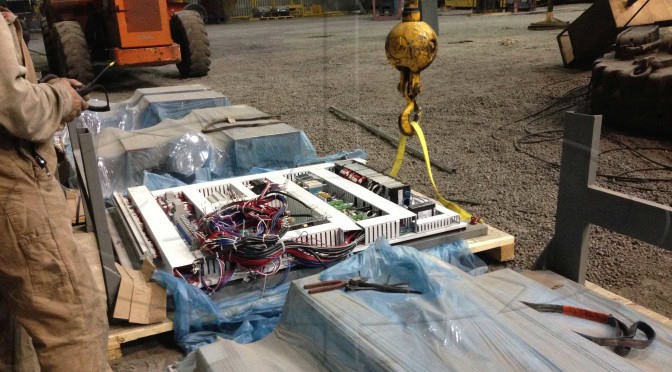
A Magnetek parts dealer in Baltimore, MD, becomes relevant when changes in crane performance begin to affect safe operation, uptime, or control response. In practice, that may involve braking inconsistency, drive fault conditions, or component replacement that must not disrupt the broader system.
These types of issues usually appear over time during normal operation, as daily cycling, changing loads, and small performance losses compound.
Keeping equipment running
- Maintenance and reliability teams managing replacement of high-wear components like brake shoes and actuators while troubleshooting repeat faults or supporting Magnetek drives and controls nearing end-of-life.
Reducing downtime and risk
- Plant and operations leaders managing stoppages, safety exposure, and repair windows—especially where legacy Magnetek components such as Series 4 drives are being phased out
Planning a scoped repair or upgrade
- Engineers and project managers determining which Magnetek components can be swapped directly, which require compatibility review, and where a repair becomes a larger system-level decision
Buying the right part
- Purchasing and procurement teams responsible for obtaining confirmed part numbers, compatible replacements, and realistic lead times without causing ordering errors or repair delays
Common Uses for Magnetek Parts
In overhead crane and hoist systems, Magnetek components play a central role in controlling motion, power, and operator input. Their influence extends to how cranes lift, stop, travel, and behave under load across industrial environments.
Within common crane system setups, Magnetek components are used to:
- Control braking and load holding during hoisting, lowering, and stopping.
- Regulate motor speed and torque for controlled acceleration, deceleration, and consistent positioning.
- Coordinate crane motion between bridge, trolley, and hoist movements.
- Manage power flow linking motors, drive controls, and braking systems.
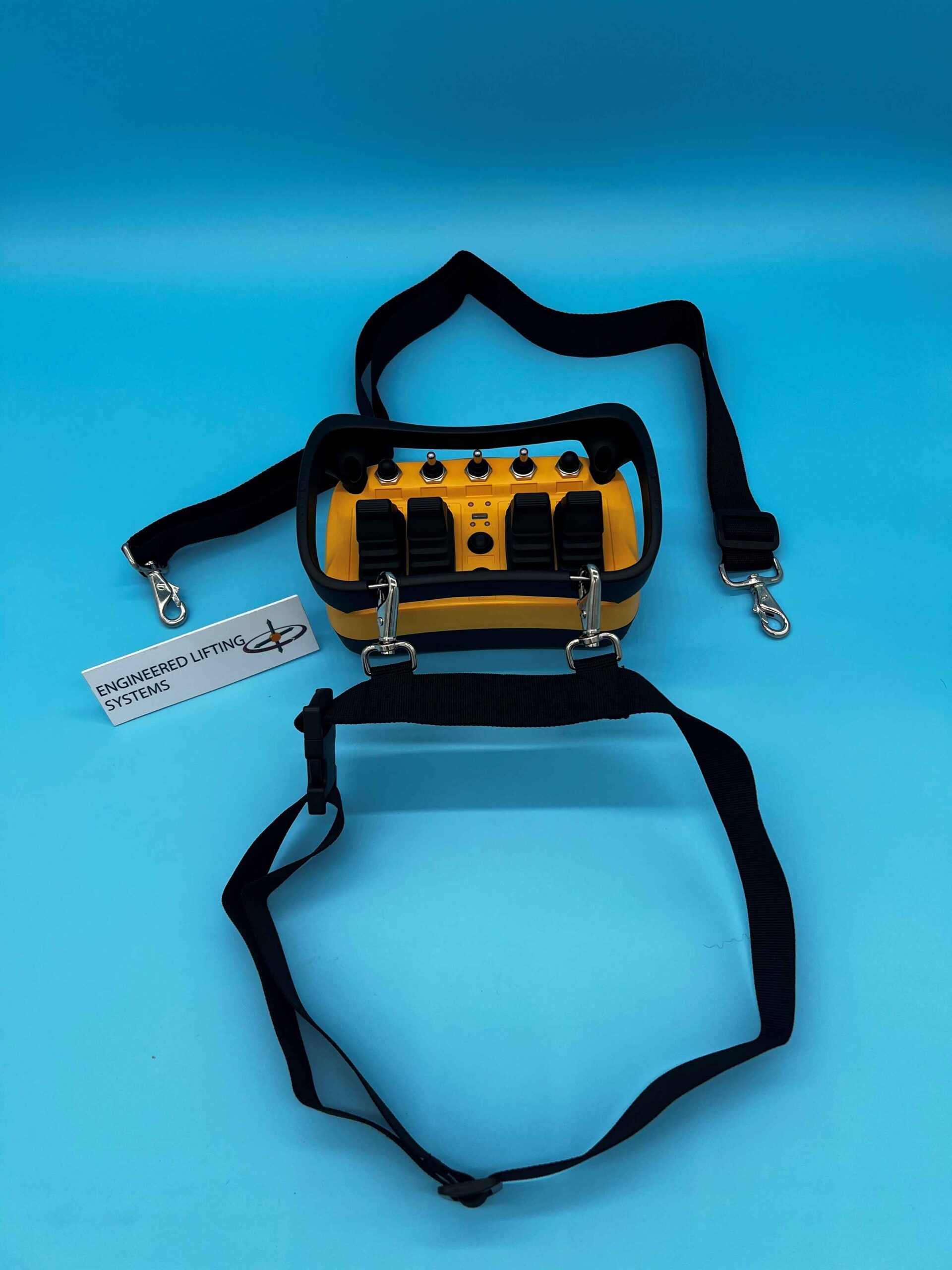
- Provide operator interfaces including pendants, radio controls, and fixed control panels.
- Integrate motion control into feedback devices, safety circuits, and automation logic.
In combination, these functions support repeatable crane behavior despite changes in load, duty cycles, and operating conditions.
Magnetek Parts our Baltimore, MD, Dealers Support
Stopping, lifting, positioning, and control response are central crane motion functions handled by Magnetek components. In combination, they keep loads stable, movement predictable, and operators in control.
The sections below examine Magnetek components that handle the highest duty, connect directly to motion and safety, and frequently influence system behavior under changing conditions.
Magnetek Brake Shoes and Braking Components
Physically stopping crane motion relies on the brake shoe (drum brake), which acts as the system’s friction surface. When a crane hoist, trolley, or overhead bridge is commanded to stop—or loses power—the brake shoe presses against a rotating surface to hold the load in place.
In day-to-day use, brake shoes stop suspended loads from drifting, creeping, or continuing to move once motion stops. They directly resist crane load weight and establish how securely the crane holds position at rest.
Since braking depends on friction, brake shoes wear gradually as time passes. As wear progresses, stopping behavior shifts subtly, which is why braking performance often shapes how “controlled” a crane feels during daily operation.
Actuators and Brake Actuation Systems
The mechanism that physically opens and closes the brake is the actuator. It applies force to release the brake during operation and allows the brake to set when motion ceases or electrical power is removed.
In crane braking systems, actuators rely on electrical, hydraulic, or electro-hydraulic power to create a straight-line push or pull. That motion separates the brake shoes from the rotating surface during operation and allows them to clamp back down at stop.
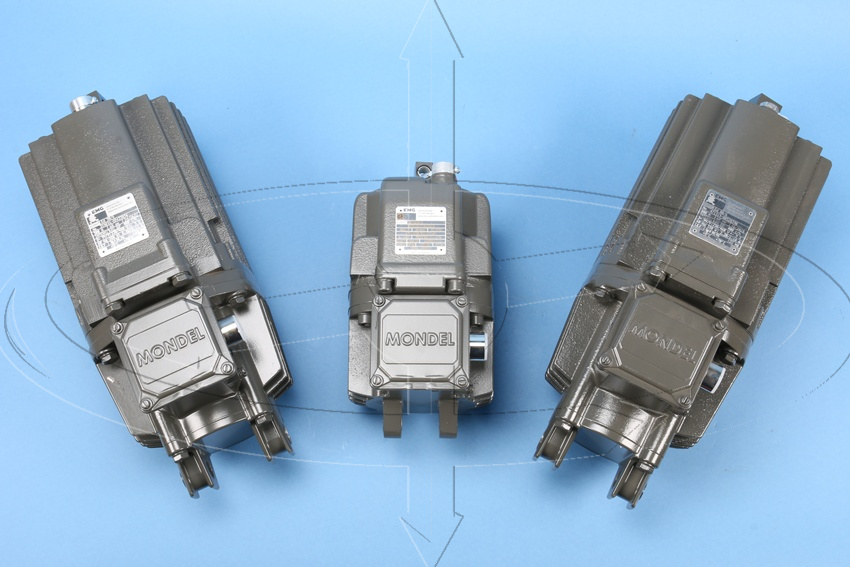
In Magnetek’s Mondel Thruster Brakes, electro-hydraulic actuators combine the hydraulic system into a single unit powered by an electric motor. An internal impeller displaces hydraulic fluid against a piston, compressing a spring to release the brake, while loss of power allows the spring to apply the brake.
This actuator style is commonly used in high-cycle hoist, trolley, and bridge brake applications.
Since actuators determine when braking force is applied and how it engages, they shape important aspects of crane operation.
- Actuators influence how rapidly the brake releases at startup.
- They determine how firmly the brake applies at stop.
- They affect braking consistency across repeated cycles.
Since actuators and brake hardware function as a matched system, changes in actuator behavior are often reflected directly in how the crane starts, stops, and holds position.
Magnetek Crane Drives
Crane drives manage motor starting, stopping, and speed changes by regulating voltage and frequency rather than relying on basic on-off control, allowing smoother acceleration, deceleration, positioning, and torque management under load.
Crane drives shape how loads lift and lower and how braking energy is handled, which is why Magnetek parts dealers in Baltimore, MD, pay close attention to drive behavior in systems using common bus line regeneration. Drive control logic also determines how motors and mechanical brakes respond together during operation.
- Acceleration and deceleration profiles.
- Speed regulation and inching performance.
- Energy flow during braking and load changes.
Across many operations, Magnetek Series 4 drives remain in service. Over time, drive-related decisions tend to center on system compatibility with motors, brakes, feedback devices, and control architecture—not just electrical ratings.
Magnetek Motors, Controls, and Operator Interfaces
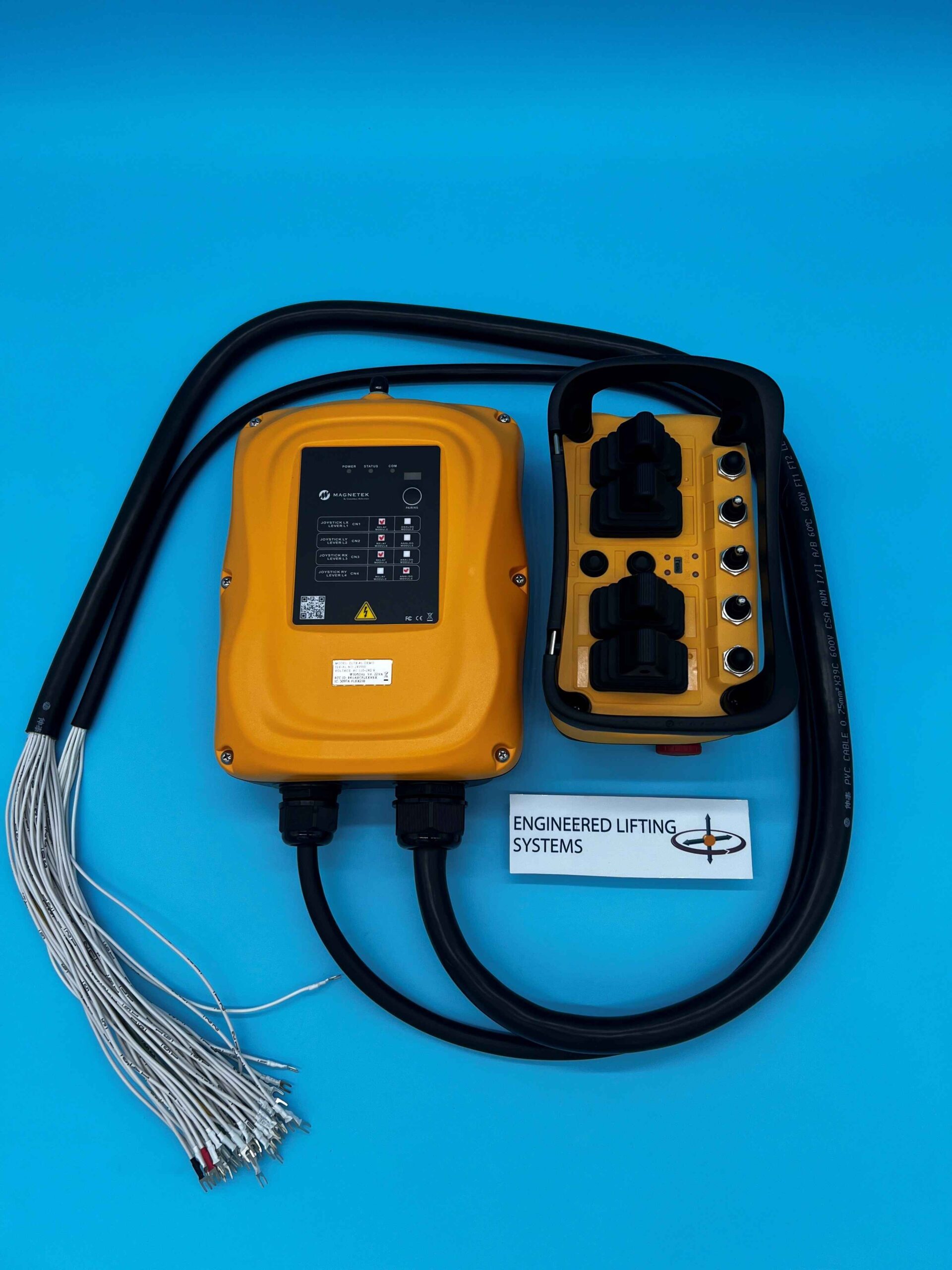
Crane motion depends on motors for physical force, while controls and operator interfaces like pendants, radios, and joysticks convert human input into commands carried out by drives and motors.
As a group, these components define crane responsiveness, positioning precision, and how effectively operators control motion across hoist, trolley, and bridge operations.
When motors, controls, or operator interfaces are changed, their direct interaction with drives and braking systems means compatibility across the motion system matters. Proper matching keeps behavior consistent instead of shifting problems elsewhere.

When to Repair vs Replace Magnetek Parts
Issues with Magnetek components do not always require replacing the entire part. Targeted crane rebuilds or repairs frequently restore reliable operation, while replacement becomes appropriate when a single failing component begins to affect crane-wide performance.
The right decision usually comes down to wear patterns, long-term supportability, and how closely a given component interacts with the rest of the crane system.
When Repair Makes Sense
Repair is often the right choice when a problem is isolated and the surrounding crane system remains stable—something typically identified through regular crane inspections. In those situations, repair makes sense when:
- The component shows normal wear and tear but remains mechanically sound.
- Adjustment, rebuild, or refurbishment returns the component to proper operation.
- Service support and replacement parts are still readily available.
- The repair avoids introducing downstream compatibility or performance issues.
Brake assemblies, actuators, and specific mechanical components often qualify for repair earlier in their service life, particularly when secondary damage has not yet developed.
When Replacement Becomes the Better Option
In situations where a component can no longer perform reliably, even after adjustment or repair, replacement becomes the better path. This is typically the case when:
- Operating behavior varies between cycles or under different conditions.
- Multiple repairs do not hold adjustments or eliminate symptoms.
- The component is increasingly difficult to source or support.
- Legacy components introduce compatibility issues with newer controls or drives.
This situation commonly appears with high-wear braking components, aging actuators, and older drive systems, especially where legacy Magnetek drives are still operating. In some cases, replacement decisions expand into rebuilds or broader crane modernization efforts that address multiple systems at once.
When a Simple Replacement Turns Into a System Decision
Magnetek components frequently operate as part of a connected system. In certain situations, replacing a single part influences motion, braking, or control behavior elsewhere in the crane.
Crane drive replacements
Installing a new crane drive impacts more than speed alone. How a drive manages acceleration, braking, and feedback communication shapes system behavior across connected material handling components. When replacement drives don’t fully align with existing motors, brakes, or control logic, subtle shifts in stopping distance, responsiveness, or motion feel can occur.
Brake upgrades
Updating braking components can shift how forces transfer through the crane during deceleration. Differences in brake style, torque rating, or actuation method can alter stopping distance or the way loads settle at stop. These changes are typically subtle but tend to stand out more under heavier loads or higher duty cycles.
Control or interface changes
Control or interface updates—such as pendants, radio controls, or crane control logic—can affect how crane motion is experienced by the operator. In cab-operated cranes, these changes can also affect visibility, ergonomics, or input layout, particularly during overhead crane cab upgrades. Even when the mechanical system remains unchanged, differences in response timing, signal handling, or control layout can affect positioning accuracy and operator confidence across hoist, trolley, and bridge functions.
In situations where interactions matter, the objective becomes more than swapping parts. The emphasis becomes restoring predictable, balanced crane operation across the system as a whole, before incremental changes lead to recurring downtime or new issues. For more information about overhead crane replacement, repair, and related services, you can contact our Baltimore, MD, Magnetek parts dealers.

Baltimore, MD, Industries That Rely on Magnetek Parts
Crane systems that depend on reliable motion control, predictable braking behavior, and long-term supportability frequently use Magnetek components. Across industrial lifting, material handling, and infrastructure environments, these industries rely on Magnetek parts because they perform consistently under duty, integrate cleanly with crane controls, and remain serviceable in demanding environmental conditions.
- Manufacturing & Fabrication
- Warehousing & Distribution
- Steel & Heavy Industrial
- Utilities & Municipal
- Process Manufacturing & Bulk Handling
- OEM, Integration & Automation
Across these settings, applications may differ, but the fundamental operational demands stay consistent.
How Magnetek Parts Are Used in Practice
The industries above vary in what they lift, how often they run, and the conditions they operate under. What changes from one environment to the next isn’t the equipment itself, but how crane braking, motion control, and long-term supportability show up in daily operation.
- High cycle frequency and repeated short moves
- Frequent starts, stops, and load transitions
- Sustained exposure to heat, dust, or shock loads
- Intermittent use with high reliability expectations
High-cycle production environments demand braking components that deliver consistent stopping behavior, avoiding downtime and short-stopping even as lifts repeat constantly and positioning tolerances stay tight. This is particularly true in manufacturing settings where short moves and frequent jogging are part of normal operation.
Where cranes start and stop hundreds of times each shift, motion-related issues are often the first to appear. Operators frequently notice:
- Crane motion that feels uneven instead of smooth
- Loads that continue moving briefly after stop commands
- Inconsistent braking from one cycle to the next
- More frequent jogging or reduced speeds to offset control response
Warehousing and distribution operations rely on responsive drives and controls to reduce these issues during frequent load transfers and long operating shifts.
Continuous-duty operation in heavy industrial facilities demands braking systems and actuators that maintain performance without drifting out of adjustment or increasing mechanical stress. Properly matched crane braking components are what make that possible.
Some cranes remain idle for extended periods before being called into service with little notice. In utilities and municipal operations, long-term support and stable control behavior matter for maintenance and service equipment that must perform reliably on demand, often confirmed through regular crane inspections.
|
|
Working With Baltimore, MD, Magnetek Parts Dealers
A Magnetek parts dealer in Baltimore, MD, offers more than component availability alone. In practice, a dealer helps facilities:
- Identify parts that match their specific crane system
- Check compatibility across drives, brakes, motors, and control components
- Avoid replacement decisions that create new downstream issues
The challenge goes beyond finding a Magnetek drive or component. It lies in knowing which part fits the existing system, how it performs in operation, and whether it alters crane behavior during loaded operation.
What a Magnetek Parts Dealer in Baltimore, MD, Actually Helps Solve
In real-world operation, Magnetek-related issues seldom trace back to one failed component. A Magnetek dealer helps address the questions that arise when drives, brakes, motors, and controls interact to manage crane motion.
- Verifying part numbers and identifying compatible alternatives for Magnetek equipment already in service
- Managing support for legacy or phased-out components, including older drive platforms
- Identifying when a direct replacement is appropriate versus when operating behavior will change
- Helping prevent component mismatches across drives, brakes, motors, and controls
Problems may surface as braking wear, drive faults, or sourcing challenges, but the goal stays consistent: return the crane to predictable operation without adding complexity. That applies whether you’re hands-on in the field or overseeing uptime to reduce unnecessary equipment downtime.
When a Dealer Becomes More Valuable Than Self-Sourcing
Part-number ordering can work for straightforward, unchanged systems. A Magnetek parts dealer becomes more valuable when factors like equipment age, operating usage, or system complexity introduce additional risk.
This scenario typically develops when:
- Original Magnetek components have become unsupported or difficult to obtain
- Several components have been replaced over time
- Drive or brake behavior has changed after previous repairs
- A repair starts to look more like a partial rebuild or modernization
OEM specifications define how Magnetek components are intended to work when systems are new and fully matched. As cranes age and configurations change, those OEM baselines still matter—but applying them correctly often requires interpretation. A Magnetek parts dealer helps translate OEM guidance into practical replacement decisions that fit the current condition of the crane, not just the original design.
Why Dealer Support Matters With Legacy Magnetek Equipment
Many facilities still rely on older Magnetek brakes, drives, and control systems years after installation. As these platforms age, replacement decisions shift toward compatibility instead of direct equivalency—particularly when targeted repairs can extend service life and reduce downtime.
Baltimore, MD, Magnetek parts dealers help navigate these situations by understanding how newer components behave within older systems, and when broader coordination—or modernization—should be considered instead of isolated replacement.
Rather than focusing only on part replacement, the goal is to restore predictable crane behavior without introducing new operational variables. You can contact our Magnetek parts dealers with any questions about overhead lifting components.
Technical FAQs About Magnetek Parts
These questions come up when facilities are sourcing Magnetek components, dealing with legacy equipment, or trying to avoid compatibility issues during repairs. Each answer focuses on practical decision-making—part selection, system behavior, availability, and risk.
What does a Magnetek parts dealer in Baltimore, MD, actually do?
Beyond supplying components, a Magnetek parts dealer helps facilities make informed part decisions that keep crane motion predictable and systems aligned.
That typically includes:
- Helping identify the correct Magnetek part for the existing crane setup
- Verifying compatibility across drives, brakes, motors, and controls
- Noting when a direct replacement could behave differently during operation
- Helping prevent mismatches that can trigger new braking or motion issues
Rather than just replacing a failed component, the goal is to restore stable crane behavior without introducing new system problems.
Do I need to work with a Magnetek parts dealer to order parts?
In straightforward, unchanged systems, self-sourcing Magnetek parts is often possible when the part number is confirmed and the replacement is truly equivalent.
Dealer support becomes more important when:
- The crane contains older or phased-out components
- Multiple components have been replaced over time and the current configuration isn’t fully clear
- A repair history has led to changes in braking feel, stopping behavior, or motion response
- The replacement involves a drive, brake, or control component that influences other systems
When compatibility matters, dealer support helps prevent returns, repeat downtime, and “it runs, but it doesn’t run right” outcomes.
What details help a Magnetek dealer identify the correct part?
The fastest path to the correct part comes from sharing details that reflect the crane’s current configuration, not just its original build.
- Any available part numbers, model numbers, or nameplate photos
- Electrical voltage and control type, including the presence of VFDs
- Drive or brake identifiers, especially for legacy platforms
- Photos of the installed component and related wiring or connections
- A quick overview of what changed—faults, braking feel, motion response, or availability issues
Partial information is often enough to narrow options and avoid parts that look correct on paper but behave differently in the field.
Will replacing a Magnetek part affect how the crane operates?
If the part affects braking, drive control, feedback, or operator input, replacement can change how the crane starts, stops, and responds under load—even when the new component is technically compatible.
This typically happens when replacing:
- Crane drives (acceleration profiles, torque behavior, braking coordination)
- Brake components or actuators tied to stopping distance, holding behavior, and engagement timing
- Operator control components tied to response timing, signal handling, and control layout
When a crane feels different after a repair, it often reflects system interaction changes rather than a single defective component.
Magnetek Parts Dealer & Purchasing FAQs
The questions below focus on sourcing, legacy equipment, and decision-making when working with our Baltimore, MD, Magnetek parts dealers.
How do Baltimore, MD, Magnetek dealers confirm the correct replacement part number?
Why can a compatible Magnetek component feel different after replacement?
Do Baltimore, MD, Magnetek parts dealer work with older or discontinued equipment?
Can Magnetek components be rebuilt rather than replaced?
When does working with Baltimore, MD, Magnetek parts dealers make more sense than self-sourcing?
What information should we document after replacing Magnetek components?
How can Baltimore, MD, Magnetek parts dealers help reduce downtime during repairs?
When does part replacement indicate a need for crane modernization?
Why Teams Work With Our Magnetek Parts Dealers in Baltimore, MD
When working with Magnetek components, choosing the right part impacts more than availability; it shapes how the crane behaves in real-world operation. Engineered Lifting Systems takes an engineering-first approach to Magnetek parts support, emphasizing compatibility, system behavior, and long-term reliability.
Clients work with us because sourcing parts is never just about availability. It’s about keeping crane behavior predictable, safe, and supportable over the long term.
In our role as a Magnetek parts dealer in Baltimore, MD, we help you:
- Identify the correct parts: Confirm appropriate Magnetek part numbers and compatible options based on real-world crane configuration.
- Support legacy equipment: Help source and support legacy Magnetek brakes, drives, and controls when direct replacements are no longer available.
- Avoid compatibility issues: Help avoid mismatches across drives, brakes, motors, and controls that alter stopping behavior or motion response.
- Coordinate repair and rebuild decisions: Assist with brake rebuilds, actuator service, and staged upgrades when replacement isn’t the right path.
- Ground decisions in inspection data: Use crane inspection data to guide parts decisions rather than guessing.
Since Magnetek components work in coordination with electrical, mechanical, and control systems, parts decisions frequently extend beyond simple replacement.
Beyond Magnetek parts sourcing, Engineered Lifting Systems also supports:
- Weidmuller Power Supplies and Relays
- Overhead Crane Automation
- Crane Modernization
- Crane Repair
- Process Cranes
- NORD Gearbox Parts
- Mechanical Modernization
By understanding how Magnetek components interact with the rest of the crane, parts support becomes less reactive and more intentional. That perspective helps facilities maintain predictable motion and avoid cascading issues as systems change over time.
Talk With a Magnetek Parts Specialist Now
If hard-to-source Magnetek parts, legacy drives, braking issues, or compatibility questions are creating uncertainty, we can help you evaluate options before downtime escalates.
Call 866-756-1200 or contact us online to review your overhead lifting system and discuss next steps. Our job as Baltimore, MD, Magnetek Parts Dealers is to be your primary source for brakes, drives, actuators, and technical support.