
Overhead Crane Brakes Audrain County, MO
Overhead Crane Brakes in Audrain County, MO, control how a crane stops, holds position, and responds during lifting and travel. When brake performance is stable, the crane is easier to control under load and less likely to force operators to compensate for drift, uneven movement, or delay.
When braking behavior changes, the cause may be normal wear, a rebuildable component, or a larger system issue. A closer look at the brake can help determine whether adjustment, crane brake rebuild service, replacement parts, or a larger equipment decision makes the most sense.
Learn More About
- What overhead crane brakes in Audrain County, MO, need to do during lifting and travel
- Why brake problems are not always isolated to the brake assembly
- How brake performance affects the rest of the crane
- How brake safety relates to crane operating margins
- When to consider brake parts, rebuilds, or replacement options
- Answers to Audrain County, MO, overhead crane brake questions
Engineered Lifting Systems supports facilities with brake system sourcing, repair, rebuild, and upgrade needs for demanding industrial applications.
If your crane has load drift, inconsistent stopping, control issues, or brake wear, contact our team or call 866-756-1200 to talk through rebuild options, replacement parts, or the right solution for overhead crane brakes in Audrain County, MO.
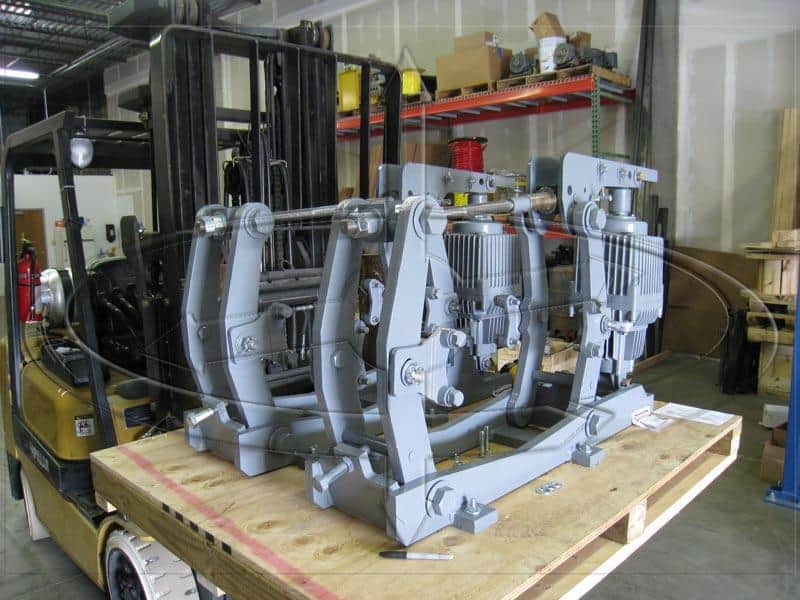
What Overhead Crane Brakes in Audrain County, MO, Need to Do
The role of brakes goes beyond stopping movement. They need to hold loads, slow motion, and respond predictably as the crane lifts, lowers, and travels.
That consistency supports safe load control and helps operators position loads with more confidence. It also reduces unnecessary stress on surrounding overhead crane parts.
What Consistent Brake Performance Looks Like
Consistently stop motion.
A brake system should bring crane movement to a controlled stop without delay, uneven engagement, or unexpected changes from one operating cycle to the next.
- The crane should not show slower-than-expected stopping response
- The way the crane stops should not change from one operating cycle to the next
- The crane should not feel more difficult to control during trolley movement, lifting, bridge travel, or lowering
Hold position under load.
Once movement stops, the brake needs to help keep the trolley, bridge, load, or hoist in position without drift, settling, or unwanted movement.
Even limited drift can create more risk for the operator, nearby crews, and surrounding equipment. A crane inspection can help identify whether that movement is tied to brake condition, adjustment, or another part of the system.
Keep crane movement predictable.
Overhead crane brakes in Audrain County, MO, should work with the rest of the crane system rather than against it. Operators should not have to compensate for delay, drift, drag, or uneven response during normal use.
Heat, noise, vibration, repeated adjustment, or visible wear around the brake assembly can point to a system that needs attention before small changes lead to equipment damage, downtime, a harder-to-control lift, or crane repair.

Why Brake Problems Are Not Always Just Brake Problems
When Audrain County, MO, overhead crane brakes change, the brake assembly is usually the first place to look—but it may not be the only place. The same change in stopping or holding behavior can come from the brake itself, the controls, the drive system, the duty cycle, or the way the crane is being used day after day.
Brakes need to be looked at in context instead of treated as a simple parts swap. OSHA’s overhead and gantry crane standards also address brakes, controls, and related equipment as part of safe crane operation.
- Worn or misadjusted brake components: Over time, friction material, springs, linkages, coils, and related parts can wear down or fall out of adjustment.
- Drive and control timing: If related components, drives, or controls are not responding correctly, braking can feel delayed, uneven, or out of sync.
- Changes in how the crane is used: Harsher environments, heavier duty cycles, increased production demands, or different load patterns can expose braking limitations that were not obvious before.
- Stress elsewhere in the system: Brake issues may also reflect problems developing in the hoist, bridge, trolley, gearbox, or control system.
One replacement may solve the issue, but repeated braking problems usually call for a closer look. In some cases, repair or adjustment is the right answer. In others, a brake rebuild, replacement, or broader modernization plan may make more sense.
How Brake Performance Affects the Rest of the Crane
Stopping distance is only one part of brake performance. When a brake drags, slips, releases unevenly, or does not hold the way it should, the effects can show up across the rest of the crane system.
When a crane keeps running without a closer look, even a minor braking issue can start affecting overall system reliability. In practice, those system-level effects often show up as:
- Loads that become harder to position accurately
- Operators compensating for delay, drift, or uneven stopping
- More stress on motors, drives, gearboxes, and related components
- More downtime, repeat service calls, or larger repair decisions
When Brake Issues Point to Repair, Rebuild, Replacement, or Modernization
After the effect on the crane system becomes clearer, the next step is deciding what level of work actually makes sense. Some brake issues can be corrected through adjustment or overhead crane repair. Others point to a rebuild, replacement parts, or a broader modernization plan as part of the crane’s equipment life cycle.
Repair or adjustment.
This can make sense when the brake is generally serviceable but needs correction, calibration, or replacement of individual wear components.
Brake rebuild.
A rebuild can be the better path when the assembly still has useful life but needs more than a small adjustment or single-part replacement.
Replacement or modernization.
This may be the better path when the brake is damaged, obsolete, undersized, difficult to support, or part of a broader pattern involving changed duty cycles, outdated controls, recurring downtime, or a crane system that no longer matches current operating demands.
The goal is not always to replace the brake as quickly as possible. The better decision is the one that protects the rest of the crane system, reduces repeat service calls, and gives the facility a more predictable path forward. If replacement is already on the table, a second look can help determine whether repair, rebuild, or modernization would deliver better long-term value.
Audrain County, MO, Overhead Crane Brake Safety and Operating Margins
How safely and predictably a crane can operate under load is shaped in part by overhead crane brakes in Audrain County, MO. When braking response changes, the issue may start small, but the margin for safe movement can narrow quickly.
That does not always mean failure is immediately around the corner. It does mean the brake system should be evaluated before load drift, longer stopping distance, repeated adjustment, or uneven travel becomes part of normal operation.
Over time, wear and aging can reduce the expected lifetime of heavy equipment components that support safe crane movement.
Brake safety concerns often show up as:
- Stopping distance that becomes inconsistent or braking effectiveness that drops
- Loads that become harder to position, drift, or settle
- Less predictable crane movement during hoist, bridge, or trolley travel
- More stress on surrounding crane components under peak duty
Addressing these changes early helps teams stay ahead of brake condition problems before smaller issues become larger safety, uptime, or equipment concerns. As those conditions keep narrowing the crane’s operating margin, brake-related decisions may move beyond simple correction and toward broader repair, replacement, or modernization work that helps reduce unplanned downtime.
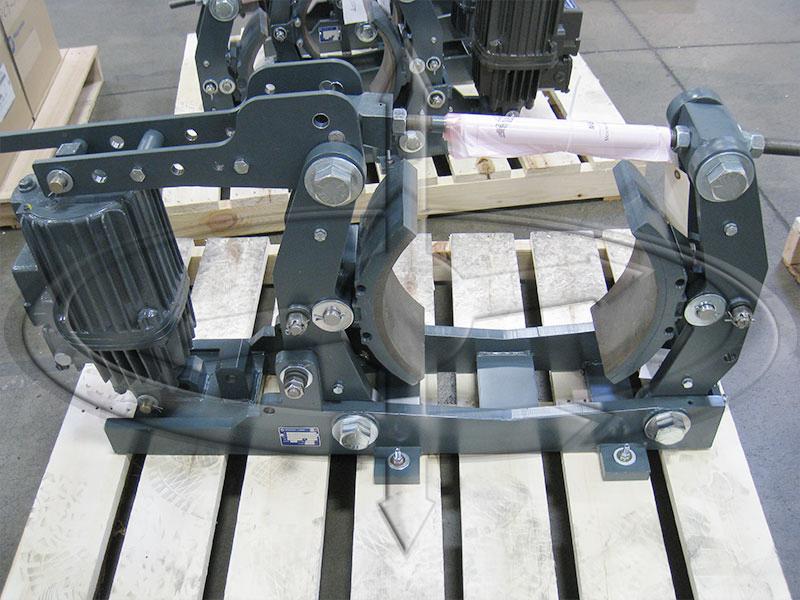
Overhead Brake Parts, Rebuilds, and Replacement Options
Once the right option is clearer, the next step is finding parts, rebuild support, or replacement options that match how the crane actually operates. Brake work should restore predictable stopping, holding, and motion behavior without introducing new issues elsewhere in the system.
Brake Assemblies, Actuators, and Wear Components
Brake work may go beyond friction material alone. Actuators, linkages, springs, coils, and related hardware all affect how the brake releases, applies, and holds through repeated operating cycles.
That work may include the following depending on brake condition and application:
- Wear component replacement for braking assemblies
- Hardware, actuator, spring, coil, and linkage evaluation
- Brake rebuild support when the assembly remains serviceable
- Brake replacement options when the existing unit is obsolete, damaged, or difficult to support
- Compatibility review when brake work affects drives, controls, motors, or other crane systems
The part is sometimes only one piece of the decision. A brake replacement may also require checking drive timing, duty cycle, actuator behavior, torque rating, and how the crane responds once the new component is installed.
Magnetek and Mondel Brake Parts and Support
Our Magnetek parts dealer support is useful for facilities sorting through legacy Magnetek parts, compatibility concerns, and replacement options across crane controls, drives, and brake systems. ELS also supports Mondel brakes in crane applications where the brake has to fit the job and still be supportable over time.
This is especially useful when a brake issue overlaps with phased-out components, older controls, changing duty cycles, or previous repairs that altered how the crane stops, holds, or responds under load.
Technical FAQs About Overhead Crane Brakes in Audrain County, MO
Brake wear, inconsistent stopping, rebuild decisions, load drift, and replacement options all raise practical questions for maintenance teams. The answers focus on brake performance, system behavior, and what to consider before the next repair or parts decision.
How can you tell when overhead crane brakes in Audrain County, MO, need service?
Brake service may be needed when stopping, holding, or release behavior starts to change during regular crane use.
- Stops that take longer than normal
- Load settling or drift after motion stops
- Uneven stopping from one cycle to the next
- Unusual sound, vibration, or heat coming from the brake area
- Brake wear or repeated adjustment showing up more often than expected
Changes in stopping or holding behavior should be checked before they lead to repeat downtime, equipment damage, or a lift that becomes harder to control.
How can brake issues affect the rest of the crane?
Yes. When a brake drags, slips, releases inconsistently, or fails to hold properly, the problem can spread beyond stopping performance. The result may be harder load control, more operator compensation, and additional stress on drives, motors, gearboxes, or related crane components.
A brake issue that looks minor at first can become a larger reliability problem if the crane keeps operating without a closer look.
Why would braking problems continue after a crane brake part is replaced?
Replacing one component does not always address the full cause of a braking problem. If the crane still stops, holds, or releases inconsistently after replacement, the problem may involve adjustment, controls, wear, or application conditions.
- Brake adjustment or calibration
- Actuator performance during braking and release
- Drive response or control timing
- Duty cycle or application mismatch
- Wear elsewhere in the crane system
If the same brake issue returns, the crane needs a closer system-level review before more parts are swapped in.
Can overhead crane brakes in Audrain County, MO, be rebuilt instead of replaced?
Rebuilds are often worth considering when the brake assembly can still be supported and the repair need goes beyond one adjustment or replacement part. A rebuild usually focuses on worn parts, proper adjustment, and returning the brake assembly to reliable service.
When the brake is obsolete, damaged, undersized, difficult to support, or no longer matched to the crane’s current duty cycle, replacement may be the better choice.
When is repairing a crane brake the better option?
Facilities may choose repair when the brake is still serviceable and the issue points to worn components, calibration, or a mechanical problem that can be corrected. Repair becomes more practical when parts can still be sourced and the brake still fits the crane’s current operating demands.
If repeated repairs keep chasing the same brake problem, replacement or modernization may be the better long-term decision.
When should recurring brake problems lead to a modernization review?
Brake problems may become a modernization question when they appear alongside outdated controls, recurring downtime, obsolete parts, changed duty cycles, or a crane system that no longer matches the work being done.
Modernization may make more sense when one-off repairs keep shifting the issue instead of restoring predictable crane operation.
How can facilities help identify the right crane brake parts?
Facilities can usually narrow the search faster by gathering details about the brake, the crane, and the behavior that prompted the parts request.
- Manufacturer details, model number, and brake nameplate information
- Crane duty cycle, capacity, and application details
- Voltage requirements and control setup
- Clear photos of the brake, mounting area, and surrounding parts
- Reported symptoms, including longer stops, heat, noise, load drift, or adjustment that keeps returning
Those details help determine whether the issue points to a wear component, actuator, brake assembly, or broader system problem.
Why Facilities Work With ELS for Overhead Crane Brakes in Audrain County, MO
Brake trouble can involve more than the component that first shows wear or failure. Crane motion, actuator response, holding performance, stopping behavior, and drive timing all affect how the system behaves under real operating conditions.
Engineered Lifting Systems helps facilities review brake issues with the larger crane system in mind. That means looking beyond the failed part and deciding whether the brake needs adjustment, repair, a rebuild, replacement, or a larger modernization review.
Depending on the brake issue and crane system, that support may include:
- Check how the brake behaves: Identify changes in stopping, holding, release timing, drift, heat, noise, or repeated adjustment.
- Help sort repair from rebuild decisions: Sort out whether the brake needs a smaller correction, a rebuild, or a replacement.
- Source parts around the application: Find brake components and replacement options that match crane use, system configuration, and duty cycle.
- Review related system factors: Connect recurring brake problems to drives, gearboxes, controls, motors, and the surrounding crane system.
- Connect brake issues to bigger upgrade decisions: Review whether repeated brake issues point to broader repair, modernization, or lifecycle decisions.
ELS also supports:
The point of brake service is to make the system easier to understand, not leave the facility guessing. ELS looks at the brake system with the surrounding equipment in mind, helping facilities make the next repair, rebuild, or replacement decision with better information.
Review Your Overhead Crane Brake Needs in Audrain County, MO
When overhead crane brakes start showing drift, heat, wear, noise, inconsistent stopping, or repeated adjustment needs, we can help evaluate the system before a small issue becomes a larger outage.
Call 866-756-1200 or contact us online to get help with brake parts, rebuild support, replacement planning, and the right solution for overhead crane brakes in Audrain County, MO.