
Magnetek Crane Controls in St. Louis, MO
Magnetek crane controls in St. Louis, MO, support predictable crane motion by managing lifting, travel, braking response, and load positioning. When those components become worn or unreliable, facilities may face production delays without a clear repair or replacement path.
Engineered Lifting Systems supports facilities as they identify Magnetek control problems and review compatible replacement options. ELS also helps compare repair with broader modernization needs. This guide reviews Magnetek crane control operation and the problems that may lead facilities to seek parts or system support.
Learn More About
- How Magnetek controls coordinate crane movement and operator response
- The major control components used across the crane system
- Operating changes that may signal a control problem
- How facilities weigh repair, replacement, and modernization
- Where reliable crane controls matter most daily operation
- Common situations that lead facilities to review their control systems
- Technical questions about Magnetek crane controls
Contact our team or call 866-756-1200 for help identifying Magnetek control components, finding compatible replacements, or deciding whether repair, replacement, or modernization is the right path.
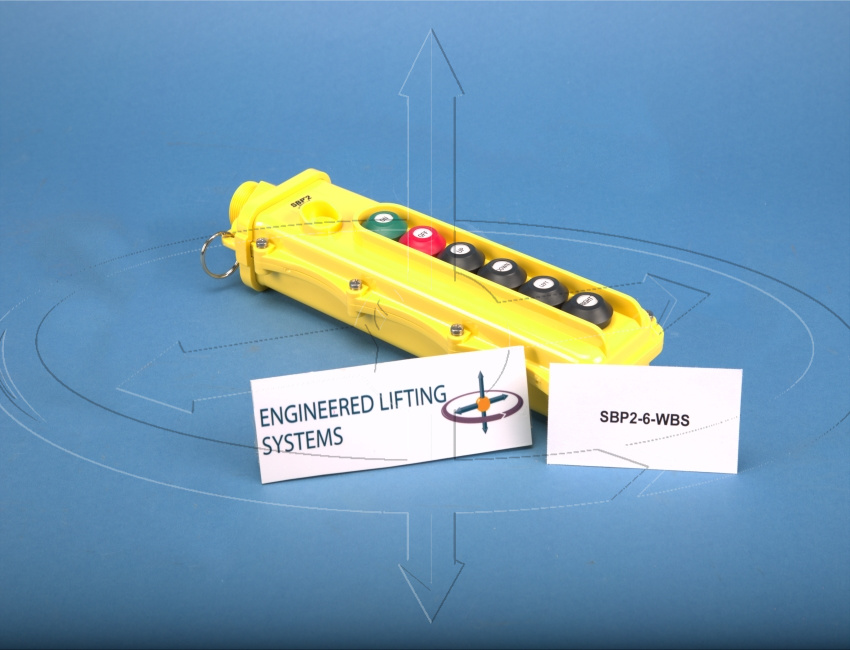
Magnetek SBP2-6-WBS Pendant Station
How Do Magnetek Crane Controls Work in St. Louis, MO?
Magnetek crane controls direct how overhead cranes respond to operator input, helping coordinate motion, braking, and load handling throughout each lift. That supports safe, predictable crane operation during everyday material handling.
Direct lifting and travel
Coordinate lifting, lowering, bridge travel, and trolley movement with controlled acceleration and deceleration.
Translate operator commands
Receive operator input through radio controls or pendant controls and translate it into crane movement.
Connect the crane control system
Allow drives, motors, brakes, and other control components to operate as one integrated system.
Operators may recognize a developing control issue when crane movement changes or response becomes delayed. Recurring faults and unusual braking behavior provide other warning signs. Control-system review helps narrow the problem before a repair, component replacement, or modernization decision is made.
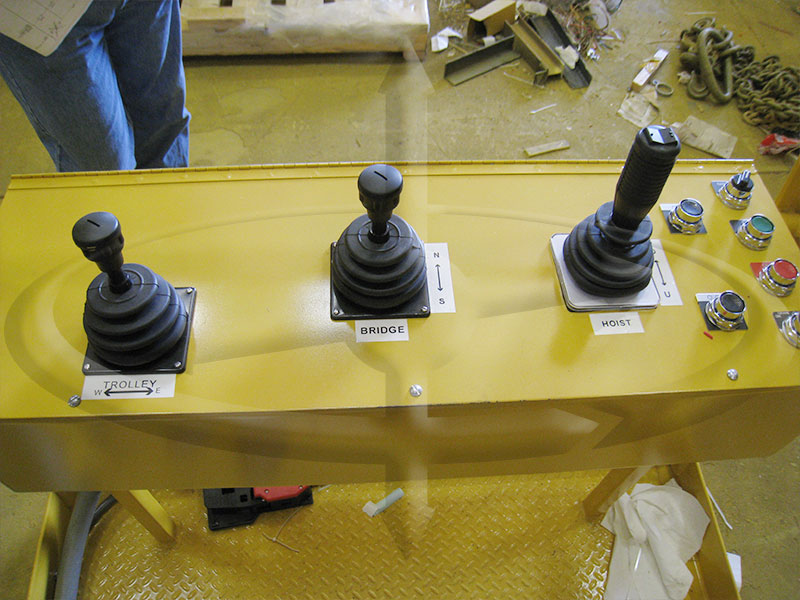
Magnetek Crane Controls
Common Magnetek Crane Control Components
Magnetek crane control systems in St. Louis, MO, combine several components that manage movement, operator input, and braking. While every crane is configured differently, these are some of the most common control components.
- Variable Frequency Drives (VFDs) – Regulate motor speed to support controlled crane travel and lifting motion.
- Radio Remote Controls – Support remote crane operation from a location suited to load visibility and movement.
- Pushbutton Stations & Pendants – Allow operators to manage crane travel and lifting functions through a wired control station.
- Motors – Drive the lifting and movement functions required by the crane.
- Braking Systems – Coordinate stopping response with crane movement and load handling.
- Supporting Control Electronics – Keep encoder cards, interface boards, relays, and other control hardware communicating correctly.
A problem in one control component may produce symptoms elsewhere in the crane system. Reviewing how the components interact helps isolate the problem before a repair or replacement path is selected.
Signs That Magnetek Crane Controls Need Attention
Control problems rarely begin with a complete crane failure. More often, operators notice gradual changes in how the crane responds during normal operation. Further review is needed to identify the failed component, but the observed symptoms help guide that process.
Changes that may indicate a control problem include:
- Jerky or inconsistent crane movement
- Delays between control input and crane movement
- Changes in braking or load control
- Drive or control errors that do not stay cleared
- Intermittent signal loss within the control system
- Outdated or unavailable replacement parts
When Magnetek crane controls in St. Louis, MO, start affecting production, the facility has to determine whether the problem calls for repair or component replacement. Some situations may support a broader modernization.
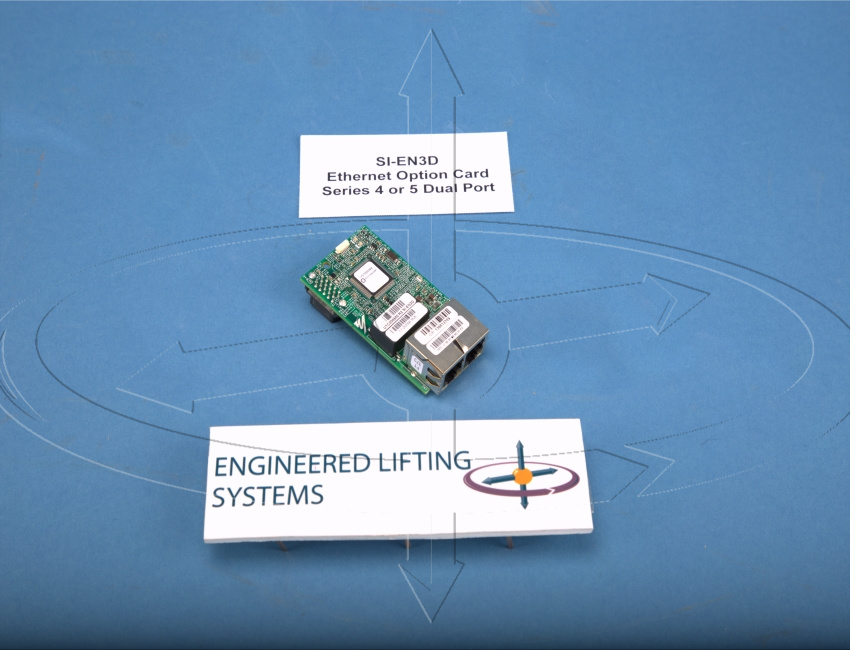
SI-EN3D Ethernet Option Card
Should Magnetek Crane Controls Be Repaired, Replaced, or Modernized?
Magnetek crane control work in St. Louis, MO, may range from an individual repair to complete control modernization. Component condition provides one part of the answer. The facility should also consider system age, available replacement parts, and how much downtime the operation can support.
Restore a Magnetek Control Component
Repair provides a practical option when the affected component can be restored without replacing dependable equipment around it. Restoring the component may resolve the immediate problem while preserving control equipment that continues to perform properly.
Repair often reduces downtime without replacing control equipment that remains dependable.
Install a Magnetek Replacement Component
Component replacement provides the better path when repair will not return the Magnetek control to dependable service. The correct replacement may restore normal response while preserving the existing control arrangement.
- The failure is isolated to a component that cannot be restored reliably
- The replacement part fits the current Magnetek configuration
- The surrounding control components continue operating dependably
A matched replacement may correct the failure while allowing the existing control system to remain in service.
Modernize the Crane Control System
Modernization should be considered when ongoing control failures and limited parts support make the existing system difficult to maintain. A broader control update may improve crane reliability while making future maintenance easier to manage.
Modernization provides a system-level response when long-term reliability matters more than another individual repair.
The practical path forward often depends on which components remain available. When repair parts become difficult to source or compatible replacements are uncertain, an experienced Magnetek parts dealer helps facilities evaluate practical options before production delays become even more costly.
Where Magnetek Crane Controls Are Commonly Used
Industrial operations in St. Louis, MO, use Magnetek crane controls to support overhead lifting and material movement. Facilities that depend on continuous lifting and transfer operations need predictable crane motion to limit disruption.
- Manufacturing & Fabrication: Support material movement between fabrication and production areas.
- Steel & Metal Processing: Support cranes that lift heavy loads through demanding operating cycles.
- Warehouse & Distribution Operations: Manage material-handling equipment used to move products through warehouse operations.
- Automotive & Assembly: Provide consistent crane movement for repetitive assembly and positioning tasks.
- Infrastructure Maintenance: Support maintenance lifts involving inspection, repair, or replacement.
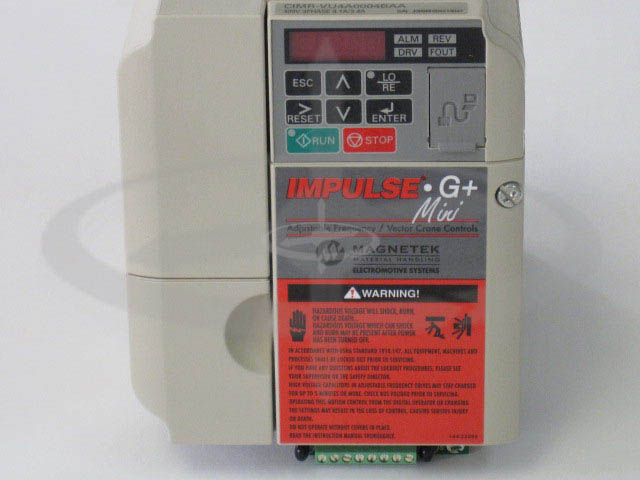
Magnetek Drive 4003-G+M Mini Series
Common Reasons to Review Magnetek Crane Controls
Crane control review commonly begins with a problem that needs attention rather than a scheduled upgrade. The following problems commonly prompt facilities to evaluate Magnetek crane controls in St. Louis, MO.
Does Any of This Sound Familiar?
“The crane is running, but its response has changed.”
A developing control problem may appear through uneven movement or delayed response. Intermittent faults and changes in braking provide other warning signs. Investigating those symptoms early may identify an isolated issue before it leads to unplanned downtime.
“The failed control component has been identified.”
A known component failure provides a clearer replacement path. The new drive, brake, pendant, or radio control still has to work with the crane configuration already in place.
“Replacement parts are getting harder to find.”
Limited parts availability changes how practical it is to maintain an older control system one component at a time. A larger replacement or modernization may provide clearer long-term support.
“We need a better answer than another temporary repair.”
Repeated control failures often suggest that the issue extends beyond a single component. Reviewing the overall control system may identify opportunities to improve reliability and reduce recurring downtime.
For Magnetek crane controls in St. Louis, MO, ELS helps facilities evaluate the immediate problem within the condition of the larger system.
Magnetek Crane Control FAQs for St. Louis, MO
How do I know whether a Magnetek crane control problem needs repair or replacement?
The source and extent of the failure guide the repair-or-replacement decision. An isolated problem involving a single serviceable component may be a good repair candidate, while damaged, obsolete, or unreliable components often make replacement the better long-term option.
The broader condition of the Magnetek control system affects the appropriate path. If problems extend across multiple control components, continued individual repairs may offer less value than a broader modernization strategy.
How do Magnetek control problems appear during crane operation?
Control-system problems often begin with gradual operational changes rather than complete crane failure. Warning signs may include changes in movement or braking as well as control-system errors that repeatedly appear.
Operating symptoms provide a useful starting point without confirming which control component has failed. A structured inspection helps connect the operating symptoms with the condition of the crane before replacement work begins.
What details are needed to identify a Magnetek control component?
The original part or model information narrows the options, but the crane application determines whether a component will work correctly.
- Original Magnetek part information
- Photos of the existing component and nameplate
- Available crane make or model information
- Whether the crane uses radio or pendant control
- Fault information and the symptoms operators have noticed
- Earlier control repairs or modernization changes
When identification details are incomplete, information about the crane application may still narrow the replacement search.
When should facilities consider Magnetek crane control modernization in St. Louis, MO?
Modernization may provide the better path when aging control components fail repeatedly and available replacement parts become limited. Rather than replacing one component at a time, modernization addresses the long-term reliability and supportability of the crane control system.
Production expansion may create an opportunity to modernize crane controls alongside other equipment upgrades.
Can an older overhead crane use current Magnetek controls?
Compatibility is possible, though the installed crane configuration matters more than age alone. The complete control arrangement should be reviewed, including operator input and the components responsible for movement and braking.
A properly matched component may return the crane to service with limited modification. Some older control arrangements need a broader update before current components can provide reliable long-term operation.
Magnetek Crane Control Support From ELS in St. Louis, MO
Connected crane controls may affect one another when a component begins failing. An isolated drive problem may require component-level work, while repeated faults or aging controls suggest that the complete system needs attention.
Control-system services may include:
- Magnetek Replacement Parts
- Magnetek Drive Repair
- Weidmuller Terminal Blocks
- Magnetek Distributor
- Weidmuller Authorized Distributor
- Magnetek Parts Dealer
- Weidmuller Connectors and Terminal Blocks
- NORD Authorized Distributor
Contact ELS at 866-756-1200 or through our online contact form to discuss Magnetek crane controls in St. Louis, MO, and the components used by your overhead crane.