
Magnetek Crane Controls
Magnetek crane controls manage overhead crane lifting, lowering, travel, braking, and load positioning with smooth, predictable motion. When control components wear out, become obsolete, or stop responding as expected, downtime and uncertainty about the right next step often follow.
Engineered Lifting Systems helps facilities identify Magnetek control issues, source compatible replacement components, and determine whether repair, replacement, or modernization is the best solution. This guide explains how Magnetek crane controls work, common problems to watch for, and the options available to keep crane systems operating reliably.
Learn More About
- How Magnetek controls manage crane movement and operator response
- The major control components used across the crane system
- Operating changes that may signal a control problem
- How facilities weigh repair, replacement, and modernization
- Where reliable crane controls matter most during daily operation
- Common situations that lead facilities to review their control systems
- Technical FAQs about Magnetek crane controls
Contact our team or call 866-756-1200 for help identifying Magnetek control components, finding compatible replacements, or deciding whether repair, replacement, or modernization is the right path.
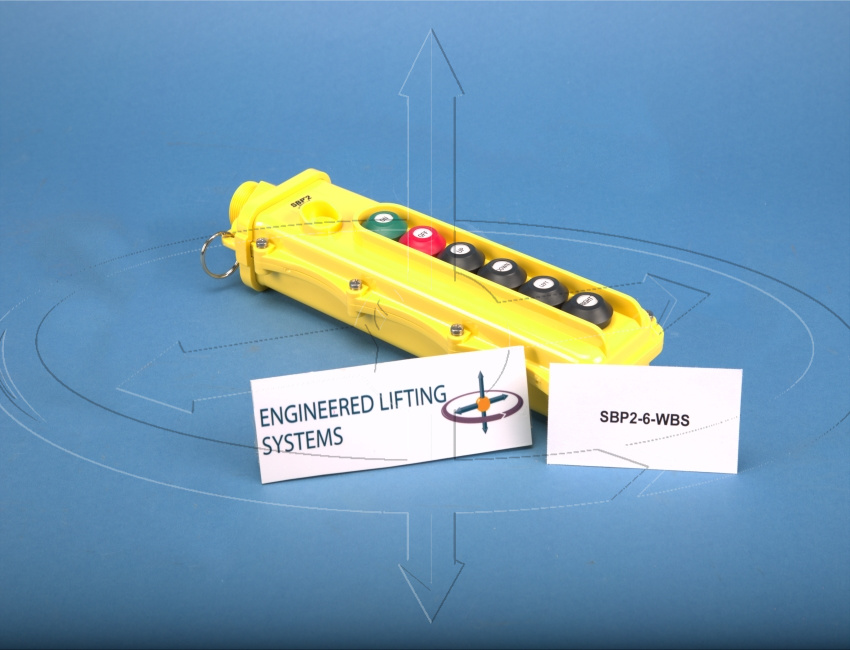
Magnetek SBP2-6-WBS Pendant Station
What Do Magnetek Crane Controls Do?
Magnetek crane controls direct how overhead cranes respond to operator input, helping coordinate motion, braking, and load handling throughout each lift. That supports safe, predictable crane operation during everyday material handling.
Manage crane movement
Coordinate lifting, lowering, bridge travel, and trolley movement with controlled acceleration and deceleration.
Respond to operator input
Translate commands from radio controls or pendants into predictable crane movement.
Coordinate system components
Allow drives, motors, brakes, and other control components to operate as one integrated system.
When crane controls stop responding as expected, operators may notice inconsistent movement, delayed response, recurring faults, or changes in braking performance. Identifying the affected control component is the first step toward selecting the right repair, replacement, or modernization approach.
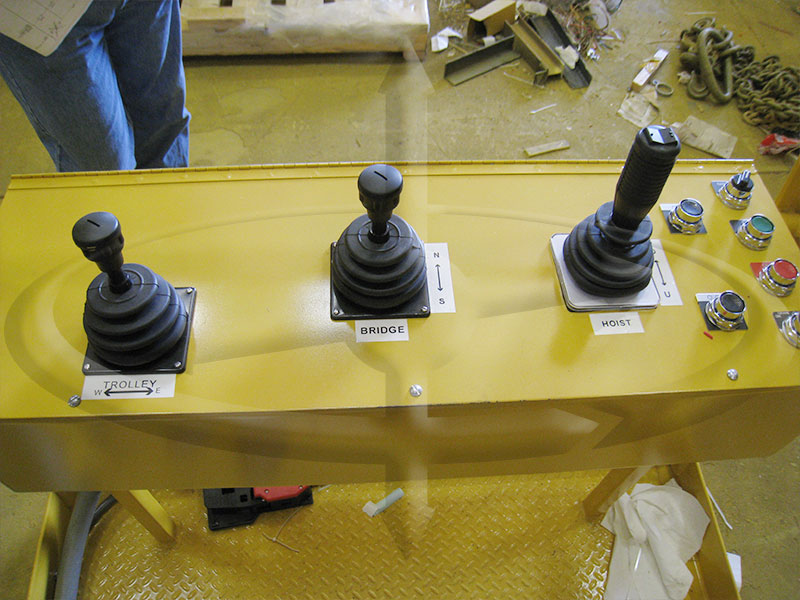
Magnetek Crane Controls
Major Magnetek Control Components
Magnetek crane control systems combine several components that manage movement, operator input, and braking. While every crane is configured differently, these are some of the most common control components.
- Variable Frequency Drives (VFDs) – Control motor speed, acceleration, deceleration, and overall crane motion.
- Radio Remote Controls – Deliver wireless operator control from a safe operating position.
- Pushbutton Stations & Pendants – Provide wired operator control for lifting, lowering, and crane travel.
- Motors – Supply the lifting and travel power required during crane operation.
- Braking Systems – Deliver controlled stopping and reliable load handling.
- Supporting Control Electronics – Keep encoder cards, interface boards, relays, and other control hardware communicating correctly.
Problems involving one control component often appear somewhere else in the system. Understanding how these components work together helps narrow the source of the problem before deciding on repair, replacement, or modernization.
Common Signs of Magnetek Control Problems
Control problems rarely begin with a complete crane failure. More often, operators notice gradual changes in how the crane responds during normal operation. While these symptoms do not identify the failed component on their own, they help narrow the possible cause.
Symptoms that may point to a control system issue include:
- Jerky or inconsistent crane movement
- Delayed or inconsistent operator response
- Changes in braking or load control
- Recurring drive or control-system fault codes
- Intermittent communication between control components
- Obsolete or difficult-to-source replacement parts
When crane controls begin interrupting production, the next step is deciding whether repair, replacement, or modernization makes the most sense for the equipment and the operation.
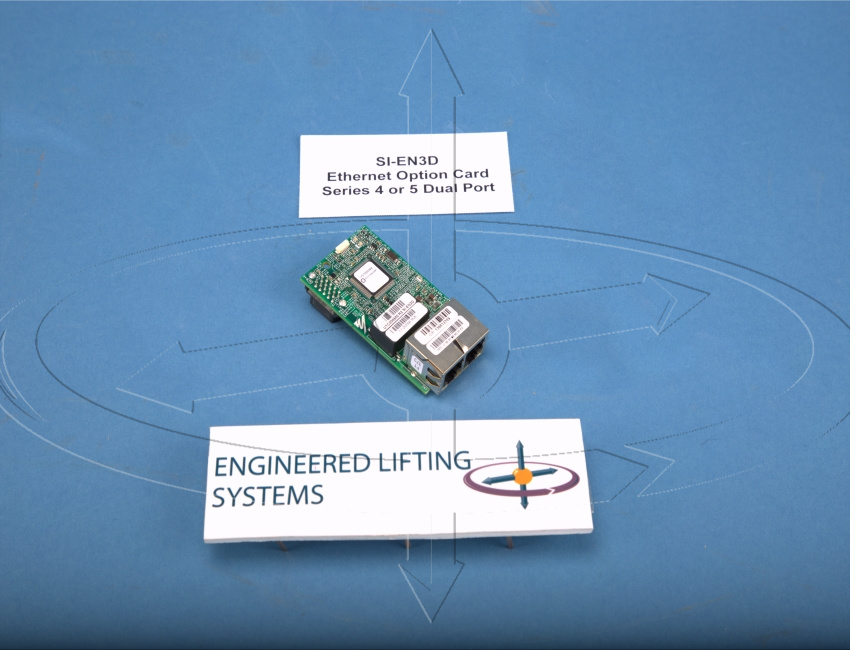
SI-EN3D Ethernet Option Card
What’s the Right Solution for Magnetek Crane Control Problems?
Repair, replacement, and modernization all have a place in Magnetek crane control systems. The right choice depends on the failed component, the condition of the overall control system, parts availability, production demands, and the facility’s long-term goals.
Repair an Existing Magnetek Control Component
Repair is often the best choice when the problem is isolated and the rest of the crane control system remains reliable. Restoring a worn or failed component may return the crane to service quickly while avoiding unnecessary replacement of equipment that is still performing as intended.
Repair often reduces downtime while extending the service life of dependable control equipment.
Replace a Failed Magnetek Control Component
Replacement becomes the better option when a control component has reached the end of its service life or repairing it is no longer practical. Installing a compatible replacement restores normal operation while preserving the rest of the crane control system.
- A single control component has failed beyond practical repair
- A compatible Magnetek replacement is available
- The rest of the crane control system remains reliable
Component replacement often restores reliability without requiring a complete control-system upgrade.
Modernize the Crane Control System
Modernization makes sense when repeated failures, obsolete equipment, or limited parts availability make continued repairs increasingly difficult. Updating larger portions of the control system may improve reliability, simplify future maintenance, and support changing production requirements.
Modernization addresses the long-term reliability and supportability of the crane control system rather than one failed component.
Parts availability often influences the best path forward. When repair parts become difficult to source or compatible replacements are uncertain, an experienced Magnetek parts dealer helps facilities evaluate practical options before production delays become even more costly.
Where Magnetek Crane Controls Are Commonly Used
Magnetek crane controls support overhead cranes across a wide range of industries and lifting applications. Reliable motion control becomes especially important anywhere downtime affects production, material flow, or maintenance operations.
- Manufacturing & Fabrication: Support repetitive lifting, positioning, and material movement throughout production.
- Steel & Heavy Industry: Handle demanding operating environments where cranes run under heavy loads and frequent duty cycles.
- Warehousing & Distribution: Keep bridge cranes and material-handling systems moving efficiently through storage and shipping operations.
- Automotive & Assembly: Support lifting tasks that depend on repeatable positioning and predictable crane response.
- Utilities & Infrastructure: Help maintenance teams lift and position equipment during inspection, repair, and replacement work.
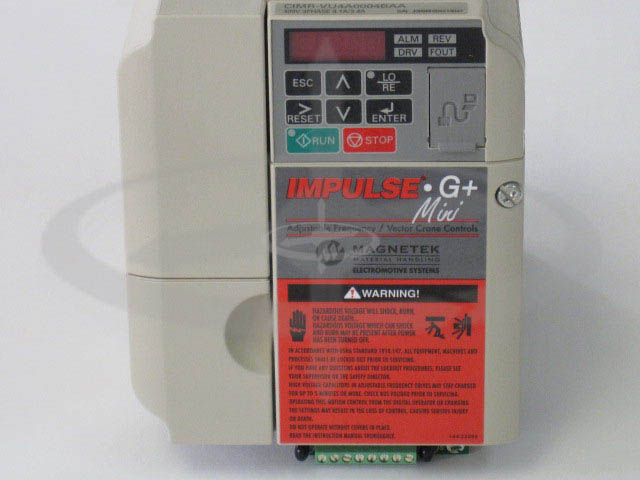
Magnetek Drive 4003-G+M Mini Series
Common Magnetek Crane Control Situations
Most crane control decisions begin with a specific problem rather than a planned upgrade. These are some of the situations that commonly lead facilities to evaluate their Magnetek crane controls.
Does Any of This Sound Familiar?
“The crane still works, but something isn’t right.”
Jerky movement, delayed response, intermittent faults, or changing braking performance often point to a developing control problem. Investigating those symptoms early may identify an isolated issue before it leads to unplanned downtime.
“We know which control component failed.”
Once the failed drive, pendant, radio control, brake, or other control component has been identified, the focus shifts to finding a compatible replacement and restoring crane operation.
“Replacement parts are getting harder to find.”
As older Magnetek products become obsolete or difficult to source, continuing to repair individual components may become less practical than evaluating broader replacement or modernization options.
“We’re fixing the same problem over and over.”
Repeated control failures often suggest that the issue extends beyond a single component. Reviewing the overall control system may identify opportunities to improve reliability and reduce recurring downtime.
Whether the issue involves one failed component or an aging control system, ELS helps facilities evaluate practical next steps for their Magnetek crane controls.
Technical FAQs About Magnetek Crane Controls
How do I know whether a Magnetek crane control problem needs repair or replacement?
The decision starts with identifying what actually failed. An isolated problem involving a single serviceable component may be a good repair candidate, while damaged, obsolete, or unreliable components often make replacement the better long-term option.
The condition of the surrounding control system also matters. While replacing one component may restore normal operation, recurring issues across multiple parts may point toward a broader modernization strategy.
What symptoms usually point to a Magnetek control problem?
Control-system problems often begin with gradual operational changes rather than complete crane failure. Common signs include inconsistent movement, delayed operator response, recurring fault codes, changing braking performance, or intermittent communication between control components.
Those symptoms help narrow the troubleshooting process, but they do not identify the failed component by themselves. Reviewing the crane through a structured inspection often provides additional information before repair or replacement decisions are made.
What information helps identify the correct Magnetek control component?
Existing part information provides the best starting point, but application details are equally important when confirming compatibility.
- Part or model number
- Photos of the existing component and nameplate
- Crane make and model
- How the crane is operated
- Observed symptoms or fault history
- Previous repair or modernization work
Even when complete information is unavailable, the equipment application often helps narrow compatible replacement options.
When does Magnetek crane control modernization become the better option?
Modernization becomes more attractive when replacement parts become difficult to source, multiple control components are aging, or recurring failures continue affecting production. Rather than replacing one component at a time, modernization addresses the long-term reliability and supportability of the crane control system.
Facilities also pursue modernization when expanding production, upgrading crane capabilities, or replacing other major electrical components.
Can newer Magnetek controls be used on older overhead cranes?
Sometimes, but compatibility depends on more than the age of the crane. The existing drives, motors, braking system, operator controls, electrical design, and overall control architecture all affect whether a newer Magnetek component will integrate properly.
In some cases, a direct replacement restores reliable operation with minimal changes. Older or heavily modified crane control systems may require additional compatible components or a broader modernization plan to achieve the desired performance and long-term supportability.
Work With ELS for Magnetek Crane Controls
Control problems rarely affect only one component. A failed drive, inconsistent radio control, recurring fault, or obsolete control component may all point to a larger decision about the crane control system.
Related services include:
Call 866-756-1200 or contact us online if you need help with Magnetek crane controls, identifying compatible components, or reviewing the best options for your overhead crane.